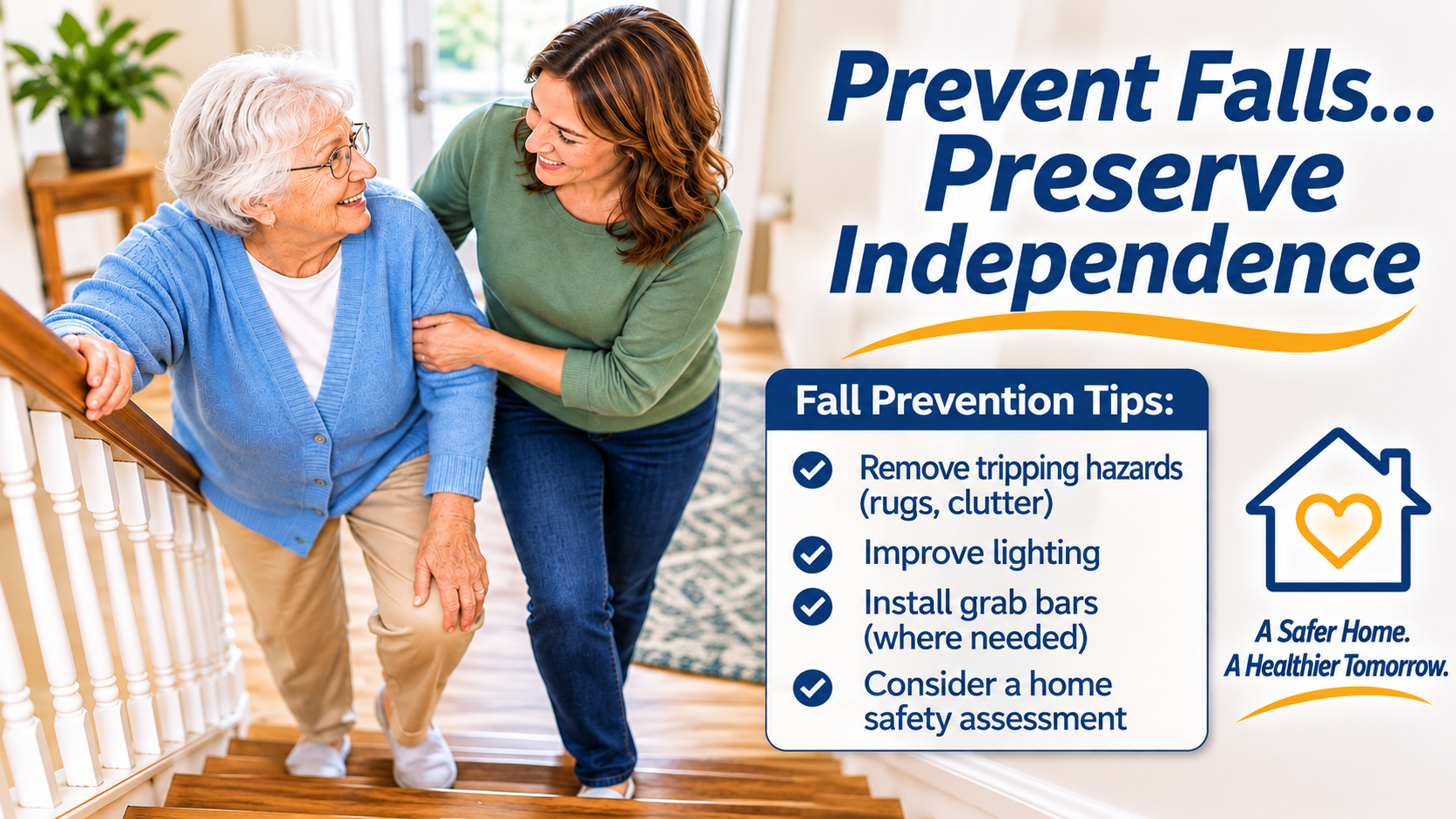
An ounce of prevention today can make a tremendous difference in tomorrow’s quality of life.
For many older adults, home represents something much more important than just a place to live. It represents independence, familiarity, comfort, and control over their daily lives.
But as we age, the very environment that has provided those comforts for decades can begin to present unexpected risks.
A loose throw rug, an uneven step, poor lighting, or the absence of a grab bar in the bathroom may seem like minor inconveniences. However, for an older adult, any one of these hazards can contribute to a fall that changes the course of their life.
And the consequences can extend far beyond the initial injury.
The Numbers Tell an Important Story
Falls among older adults are much more common than most families realize.
According to the Centers for Disease Control and Prevention (CDC):
- More than 14 million adults age 65 and older experience a fall each year — approximately one in four older adults.
- Approximately 37% of older adults who fall report an injury requiring medical treatment or restricting their activities for at least one day.
- Falling once doubles the likelihood of falling again.
- In 2024, approximately 4.5 million emergency department visits were associated with older adult falls.
These aren’t simply statistics. They represent millions of families dealing with unexpected hospital visits, rehabilitation, changes in living arrangements, and difficult decisions about the future.
The important thing to understand is that many of the circumstances contributing to these falls can be identified and addressed before an accident happens.
Why Do Seniors Fall at Home?
Falls rarely have a single cause. More often, they happen when age-related physical changes combine with hazards in the home.
Some of the most common contributing factors include:
1. Changes in Strength, Balance, and Mobility
As we get older, muscle strength, coordination, and balance can decline. Arthritis, neurological conditions, and other chronic health issues can make everyday movements more difficult.
A step that was once easy to navigate may become a challenge. Getting out of a chair, climbing stairs, or stepping into a bathtub can require more effort and stability.
2. Vision Changes
Reduced depth perception, difficulty adjusting to changes in lighting, and declining eyesight can make it harder to identify obstacles, changes in floor levels, or objects in a walking path.
The CDC identifies impaired vision as an important risk factor for falls among older adults.
3. Medication Side Effects
Certain prescription and over-the-counter medications can cause dizziness, drowsiness, low blood pressure, or changes in balance.
The combination of multiple medications can further increase the potential for problems.
Medication-related risks should be reviewed with a healthcare professional rather than addressed by independently changing or stopping medications.
4. Everyday Household Hazards
This is where the home environment becomes especially important.
Common hazards include:
- Loose throw rugs and unsecured carpeting.
- Clutter, electrical cords, and narrow walking paths.
- Poor lighting in hallways, stairways, and bathrooms.
- Missing or inadequate stair handrails.
- Slippery bathroom floors and tubs.
- Lack of grab bars near toilets and showers.
- Uneven flooring, thresholds, and steps.
According to the CDC’s fall prevention guidance, improving lighting, removing tripping hazards, installing appropriate grab bars, and adding stair railings are among the practical steps families can take to make a home safer.
The key is recognizing that a person’s physical abilities may change over time, even when the home itself has not changed at all.
The Cascading Health Effects of a Fall
The most immediate concern following a fall is usually the physical injury. But the longer-term consequences can be much more complicated.
1. Serious Physical Injuries
Falls can result in broken bones, hip fractures, head injuries, and traumatic brain injuries.
Hip fractures are particularly concerning. The CDC reports that nearly 319,000 older adults are hospitalized for hip fractures each year.
Recovery can involve surgery, extended hospitalization, rehabilitation, and months of physical therapy. Some older adults never regain their previous level of mobility or independence.
A head injury can also have serious consequences, particularly for someone taking blood-thinning medication. A head impact should receive prompt medical evaluation, even when the initial symptoms appear minor.
2. Loss of Mobility and Independence
Following an injury, an older adult may struggle with activities that were previously routine:
- Getting dressed and bathing.
- Preparing meals.
- Walking independently.
- Shopping and running errands.
- Getting in and out of bed or a chair.
What begins as a temporary recovery period can develop into a long-term need for assistance.
Some individuals require in-home caregivers, while others may need to consider assisted living or another living arrangement because returning home safely is no longer possible.
3. Fear of Falling and Social Isolation
One of the less visible consequences of a fall is the emotional impact.
Even when an injury is relatively minor, an older adult may become afraid of falling again.
They may begin avoiding stairs, limiting trips outside, declining social invitations, or reducing activities they once enjoyed.
The CDC recognizes this fear as an important part of the fall cycle. Reduced activity can lead to additional muscle weakness and declining balance, which can increase the likelihood of another fall.
In other words, the consequences of a fall can actually create conditions that make another fall more likely.
4. Increased Dependence on Family Caregivers
A fall doesn’t just affect the individual. It often changes the lives of spouses, adult children, and other family members.
Suddenly, family members may find themselves coordinating medical appointments, managing medications, arranging transportation, assisting with personal care, and making decisions about home modifications or alternative living arrangements.
For families already balancing careers and their own responsibilities, this can become an overwhelming commitment.
The Financial Cost of a Fall
The financial consequences are just as important to understand.
According to a CDC study published in 2024, the estimated medical costs associated with nonfatal falls among adults age 65 and older reached approximately $80 billion nationally in 2020.
Of that amount:
- Approximately $53.3 billion was attributed to Medicare.
- Approximately $3.5 billion was attributed to Medicaid.
- Approximately $23.2 billion was attributed to private insurance, out-of-pocket spending, and other payers.
These figures represent estimated healthcare spending associated with nonfatal falls, not the total financial impact on families.
The actual burden can extend much further when you consider:
- Emergency room visits and hospital stays.
- Surgery and rehabilitation.
- In-home caregiving expenses.
- Medical equipment and mobility aids.
- Home modifications.
- Lost time from work for family caregivers.
- Potential changes in living arrangements.
The CDC’s estimate does not capture all of these indirect and long-term costs.
For families, the financial and emotional burden can continue long after the initial medical emergency has passed.
Source: CDC – Economics of Injury and Violence Prevention
How a Home Safety Assessment Can Help
Here’s the encouraging part: falls are not an inevitable part of getting older.
While no assessment or modification can eliminate every risk, identifying potential hazards before an accident occurs can make a meaningful difference.
A professional home safety assessment takes a closer look at how an older adult actually lives in their home, identifying areas where the environment may be creating unnecessary risks.
At TEC Senior Living & Aging-in-Place Advisory, our approach considers both the home itself and the everyday activities of the individual living there.
An assessment may include:
Bathroom Safety
- Evaluating tub and shower access.
- Identifying opportunities for grab bars and other support features.
- Reviewing flooring and slip-resistant surfaces.
- Evaluating toilet accessibility and ease of transfers.
Stairways and Hallways
- Checking handrails and stairway conditions.
- Identifying uneven steps and potential tripping hazards.
- Evaluating lighting and visibility.
- Reviewing the need for additional support or safety features.
Living Areas and Bedrooms
- Identifying loose rugs, clutter, and obstructed walking paths.
- Evaluating furniture placement and accessibility.
- Reviewing lighting, particularly during nighttime movement.
- Considering the safety of getting in and out of bed and chairs.
Technology and Monitoring Opportunities
Today’s technology can also provide additional support for older adults who want to remain independent.
Depending on individual needs, options may include:
- Emergency response systems.
- Fall detection devices.
- Motion sensors and activity monitoring.
- Smart lighting and automated controls.
- Systems that help family members stay informed when something may be wrong.
The objective isn’t to turn someone’s home into a medical facility. It’s to identify practical improvements that support safety, confidence, and independence while preserving the comfort and familiarity of home.
Importantly, a home safety assessment complements, rather than replaces, a healthcare professional’s evaluation of balance, strength, vision, and medications.
Don’t Wait for a Fall to Start the Conversation
One of the biggest mistakes families make is waiting until something happens before evaluating whether a home is safe.
Often, the warning signs are already there.
Perhaps a parent has started holding onto furniture when walking. Maybe they’re avoiding the basement stairs, struggling to get into the shower, or moving more cautiously around the house.
These changes deserve attention.
A proactive assessment can help families identify concerns, prioritize improvements, and develop a plan before an accident forces difficult decisions.
At TEC Senior Living & Aging-in-Place Advisory, we believe that aging in place should be about more than simply staying in your home. It should be about maintaining the ability to live safely, comfortably, and independently for as long as possible.
Because sometimes the most important thing you can do for someone you love is to take a closer look at the place they call home.
Take the First Step Toward a Safer Home
Whether you’re an older adult planning to remain independent or an adult child concerned about an aging parent, we’re here to help you understand the opportunities to make home a safer place.
A simple conversation today could help prevent a life-changing event tomorrow.
Request a Complimentary Home Safety Consultation
Visit TEC Senior Living & Aging-in-Place Advisory to learn more about our home safety assessments and how we can help your family plan for safer, more confident aging in place.
Request a Complimentary Consultation
Educational note: This article is intended for general informational purposes and is not a substitute for medical advice, diagnosis, or treatment. Individual fall risks and recommended interventions should be discussed with appropriate healthcare professionals.
Leave a Reply